





Humidity Explained
Humidity is simply how much water vapour is in the air, but weather reports actually use three related measurements depending on what they're trying to describe. Absolute humidity is the most literal one: the actual mass of water vapour in a given volume of air, typically grams per cubic metre. Specific humidity and the closely related mixing ratio instead measure water vapour against the mass of the air itself, which is more useful for engineering and forecasting calculations because it doesn't shift around as pressure and temperature change. But the figure almost everyone actually means when they say "humidity" is relative humidity — how close the air currently is to full saturation, expressed as a percentage of the maximum it could hold at that temperature.
Relative Humidity Is Relative to Temperature
The key thing that trips people up about relative humidity is that it changes through the day even when the actual amount of moisture in the air doesn't, because warm air can hold more water vapour than cold air. As the temperature rises during a sunny morning, the same amount of moisture represents a smaller share of what the air could now hold, so relative humidity falls — without a single drop of water having left the air. This is exactly why dew point is often the more useful figure for comparing how muggy two different days actually feel: it tracks the moisture itself rather than moisture relative to a moving temperature target.
Wet-Bulb and Dry-Bulb: How It's Actually Measured
The traditional way of measuring humidity, still used as the reference method against which electronic sensors are calibrated, is the psychrometer: two identical thermometers mounted side by side, one with its bulb wrapped in a wet wick and ventilated by a fan or by being whirled through the air (a "sling psychrometer"). Evaporation from the wet wick cools that thermometer below the reading on the plain, "dry bulb" thermometer — and the drier the surrounding air, the faster the water evaporates and the bigger that cooling effect is. The gap between the wet-bulb and dry-bulb readings is looked up on a standard psychrometric chart or table to give the relative humidity directly. It's the same evaporative-cooling principle behind why stepping out of a swimming pool feels so much colder on a breezy day than a still one, and why the human body relies on exactly the same effect to cool itself through sweating.
Humidity and Air Density
Counter-intuitively, humid air is actually lighter than dry air at the same temperature and pressure. A water molecule (H₂O, molecular weight 18) is lighter than the nitrogen and oxygen molecules that make up most of dry air (N₂ at 28, O₂ at 32), and by the physical law governing gases, a fixed volume of air at a given temperature and pressure always holds the same total number of molecules regardless of what they are. So when water vapour molecules take the place of some of the heavier nitrogen and oxygen molecules, the same volume of air ends up weighing slightly less. It's a small effect, but it's real, and it's part of why humid, muggy air can feel more "buoyant" in stormy conditions — moist air rises more readily, which is one of the ingredients that helps thunderstorms build.
Measuring Humidity
A hygrometer (sometimes called a psychrometer, depending on the design) is the general term for any instrument that measures humidity directly, in the same way a thermometer measures temperature. A humidistat does the equivalent job for control rather than measurement, switching a dehumidifier or humidifier on and off to hold room humidity within a target range, just as a thermostat does for heating. On a much larger scale, weather satellites measure atmospheric humidity remotely by detecting infrared radiation that water vapour specifically absorbs and re-emits at altitudes of roughly 4-12km, which is how forecasters track the moisture feeding into developing storm systems well before any rain reaches the ground.
The Comfort Range
The widely-used ASHRAE Standard 55 for indoor thermal comfort recommends keeping indoor relative humidity between 30% and 60%, with the lower half of that range generally preferred since house dust mites struggle below about 50%.
| Relative Humidity | What It Means Indoors |
|---|---|
| Below 30% | Too dry — dry skin, irritated eyes/throat, higher static electricity risk, cracking in wood furniture and floors |
| 30% – 50% | Comfortable and recommended — also the range least hospitable to house dust mites |
| 50% – 60% | Still within the ASHRAE-recommended range, but starting to favour dust mites |
| Above 60% | Too humid — sweat stops evaporating efficiently, condensation risk rises, mould becomes much more likely |
Humidity, the Body and Electronics
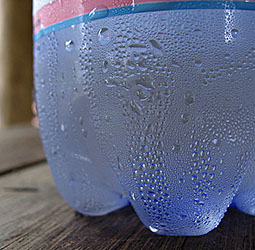
The body sheds heat mainly by evaporating sweat, so high humidity directly undermines the body's own cooling system — sweat simply can't evaporate as fast into air that's already close to saturated, which is why hot, humid days feel so much more draining than equally hot, dry ones. Electronics face the opposite kind of risk from humidity swings rather than the level itself: moving a cold device (a phone from a car boot, a camera from an air-conditioned room in the tropics) into a warm, humid space can cause condensation to form directly on circuit boards, which is a common cause of short circuits if the device is powered on before it's had time to acclimatise and dry out. Very low humidity brings a different electronics risk instead — a higher chance of static discharge, which is why data centres and sensitive manufacturing environments keep humidity carefully controlled rather than just letting it run low.
Humidity Around Southampton
Southampton's coastal, maritime position keeps relative humidity fairly high for much of the year compared with inland parts of the country. Typical monthly averages here run from around 73% in high summer (July and August) up to the high 80s and low 90s in December and January, with an annual average around 82% — one of the reasons valley and coastal fog is such a regular feature of local winter mornings, when overnight cooling routinely brings the air close to its dew point. Afternoon relative humidity tends to fall noticeably on sunny days even without any change in actual moisture content, for exactly the reason explained above — the air is being measured against a rising temperature, not gaining or losing water. For the current reading and recent trend from this station, see our own Humidity Monthly Summary page.